
26 Mar 2026
Test post 2
This is a test post 2 upphöjd siffra Detta är en mening1
7 Aug 2025
An international team of scientists from France, Germany, and Sweden has taken a closer look at how magnetism can change incredibly fast—a phenomenon called ultrafast demagnetization.
For the first time, they were able to observe some of the key steps in this process as it happens in a magnetic material. Their work, published in Nature Communications, could help pave the way for faster and more energy-efficient spintronic devices used for storing and processing information.
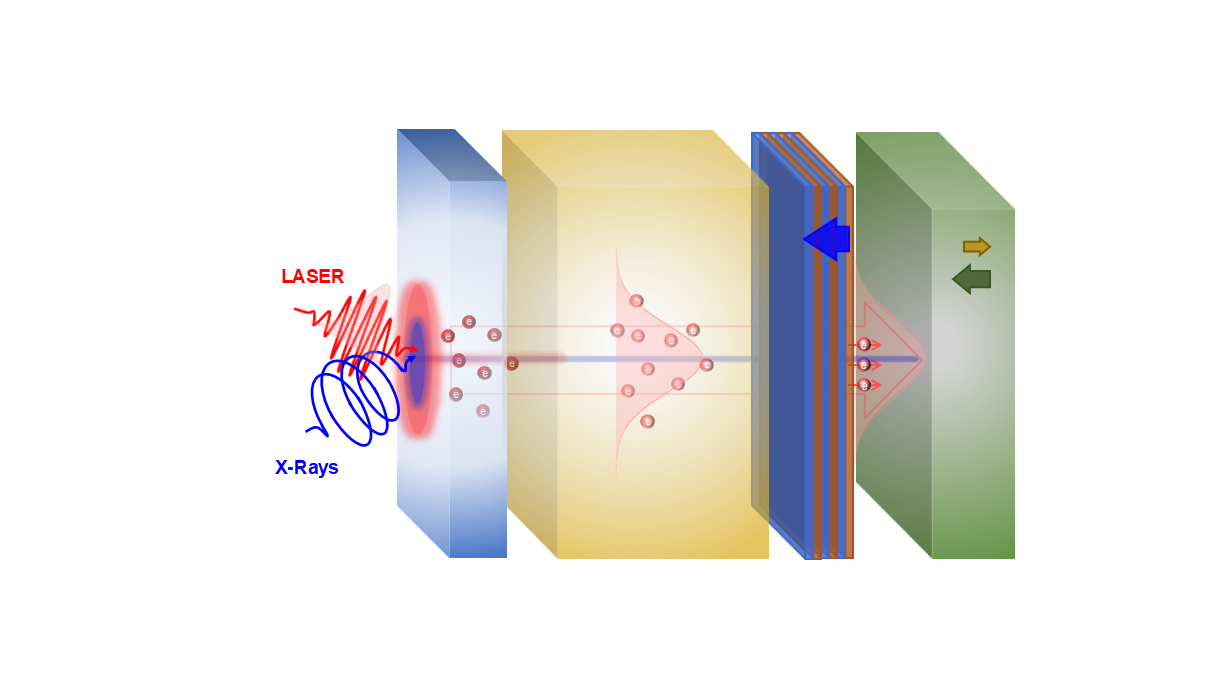
[The scheme shows (from left to right): Hot electrons generated by a laser in platinum (light blue), the copper (yellow) is used to block the laser pulse so that only the hot electrons propagate and transport a spin current through the magnetic spin valve structure of cobalt platinum (blue-brown) and iron gadolinium (green). The figure was prepared by author Deeksha Gupta (https://www.helmholtz-berlin.de/pubbin/news_seite?nid=30046;sprache=en).]
While conventional electronics rely on the movement of electric charge, spintronics makes use of a different property of electrons—their spin—to unlock new possibilities. Some of the advantages of spintronics over conventional electronics include lower power consumption, faster operation, non-volatility, and the potential for entirely new functionalities. These features not only improve performance but also contribute to greater sustainability in electronic devices. Spin is a quantum property of electrons that, among other things, contributes to magnetism in materials [¹ Not sure what magnetism is? See the note at the bottom of this page]. In this study, researchers looked at a type of spintronic device called a spin valve. It consists of two or more magnetic layers that conduct electricity. What is special about it is that its electrical resistance changes depending on how the magnetic directions² (or “moments”) of the layers are aligned. This makes spin valves useful in magnetic sensors and data storage technologies. The spin valve in this study was built using alternating layers of platinum-cobalt (Pt/Co) and an iron-gadolinium (FeGd) alloy (see featured image).
Using a femtosecond infrared laser, the team excited electrons³ in the platinum top layer, creating so-called hot electrons. A thick copper layer was used to filter out unwanted effects, ensuring that only the hot electron pulses reached the Pt/Co layer at the front of the spin valve. This layer acted as a spin polariser, producing spin-polarised hot electron (SPHE) pulses. Due to the ultrafast timescales—on the order of femtoseconds—these processes are extremely challenging to observe and characterize. To achieve this, the team conducted experiments at BESSY II, a state-of-the-art synchrotron radiation facility in Germany.
Complementing the experimental work, a research team in Sweden performed advanced simulations using theoretical models developed by Professor Olle Eriksson of Uppsala University and WISE co-director, together with his collaborators. These simulations allowed them to determine key parameters of the SPHE pulses—specifically, their duration, spin polarisation direction, and the current densities needed to reproduce the experimental results.
– I enjoyed working on this project as part of an international team, featuring strong collaboration between theoretical and experimental researchers. During this investigation, we developed the models and collected the data that I plan to use to train AI models in my WASP-WISE NEST project, says Maryna Pankratova, researcher at Uppsala University and WISE-affiliated scientist.
This work has been published in Nature Communications:
”Tuning ultrafast demagnetization with ultrashort spin polarized currents in multi-sublattice ferrimagnets” by Deeksha Gupta, Maryna Pankratova, Matthias Riepp, Manuel Pereiro, Biplab Sanyal, Soheil Ershadrad, Michel Hehn, Niko Pontius, Christian Schüßler-Langeheine, Radu Abrudan, Nicolas Bergeard, Anders Bergman, Olle Eriksson and Christine Boeglin. Nature Communications 16, 3097 (2025).
To learn more about Maryna Pankratova’s research in WISE please visit:
Brain Inspired AI Design of Topological Magnets for Sustainable Computing
Some elements in nature—like iron, nickel, cobalt, and gadolinium—are naturally magnetic. This means they show what’s called ferromagnetism, a property that makes them attract or repel each other depending on the orientation of their magnetic poles. Ferromagnetism arises from the alignment of individual magnetic moments, which can be thought of as tiny bar magnets all pointing in the same direction. These magnetic moments are the result of both the orbital motion of electrons around the nucleus and the electrons’ intrinsic spin, and together they contribute to a material’s overall magnetization.
Depending on how the magnetic moments are arranged, different types of magnetic order can form. For example, if all the moments are aligned in the same direction, the material is a ferromagnet. If neighboring moments point in opposite directions, it is called an antiferromagnet.
Electrons that have absorbed energy and moved to a higher energy level, away from their ground state.

26 Mar 2026
This is a test post 2 upphöjd siffra Detta är en mening1
26 Mar 2026
This is a test post

24 Dec 2025
We’re pleased to announce that registration is now open for the AM4Life/WISE Additive Autumn School on the theme “Post-processing in AM and Surface Engineering.”

3 Oct 2025
On 2 October 2025, Chalmers University of Technology officially inaugurated its new additive manufacturing infrastructure: AM@Chalmers and the Chalmers WISE Additive node.
3 Oct 2025
The Wallenberg Centre for Quantum Technology (WACQT) and the Wallenberg Initiative Materials Science for Sustainability (WISE) are launching a new call to spark collaboration at the cutting edge of research.
2 Oct 2025
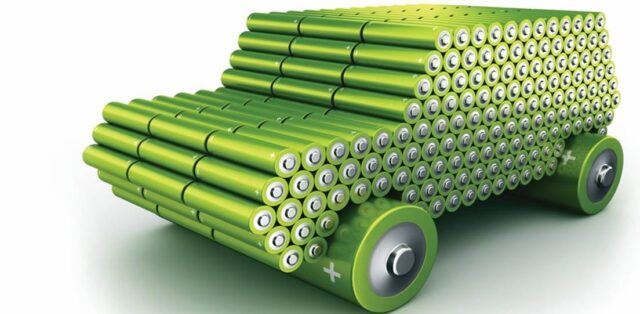
—Imagine a world where vehicles, buildings, and even everyday devices become self-powering, seamlessly merging structure and storage. This is the vision of structural power composites. Structural power composites open the door to a future where every part of a product contributes not only to its form and strength, but also to its function as an energy source, says WISE Guest Professor Madhavi Srinivasan from Nanyang Technological University.

25 Sep 2025
-Our role is to act as a bridge between PhD students, postdocs, and WISE Research School management. We receive questions and concerns both from students and postdocs as well as from the RS management, which we bring to our meetings for discussion, says Yamini Portes, chairperson of the WISE Student Council and PhD student at Stockholm University.
24 Sep 2025
Join us for the 6th Machine Learning Meets Materials Science Seminar, part of the WISE–WASP initiative! Mark your calendars: October 1 at 10:00!

24 Sep 2025
We are pleased to welcome Professor Johan Hjelm, WISE Guest Professor at Lund University (LU), and Professor Yury Gogotsi, WISE Guest Professor at Linköping University (LiU), for a joint digital event on October 2, 2025, from 15:00 to 16:00.
17 Sep 2025
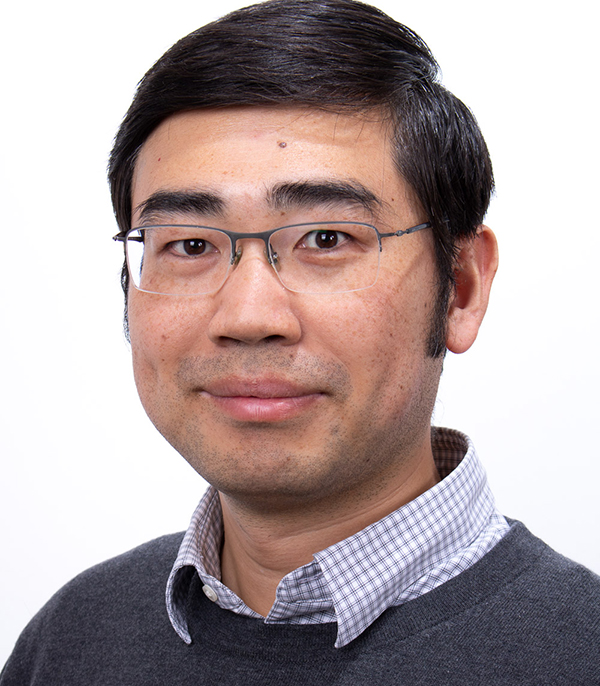
At WISE, we love to share the stories of the people driving science forward. Meet Professor Chao Zhang, an Associate Professor at Uppsala University who is passionate about reimagining the future of energy.

10 Sep 2025
–Materials science can never be done in “vacuum.” By this I mean that sustainability and circular economy must be considered from the very beginning, and this requires collaboration. No one can be an expert in everything, says WISE Guest Professor Mari Lundström from Aalto University.

2 Sep 2025
On September 11, 2025, from 15:00 to 16:00, WISE (Wallenberg Initiative Materials Science for Sustainability) will host a special guest professor lecture featuring two leading international researchers in materials science.

1 Sep 2025
The Knut and Alice Wallenberg Foundation is delighted to announce the 2025 call for Proof of Concept Grants in Materials Science for Sustainability, is now open for applications until October 15, 2025, at 13:00.
26 Aug 2025
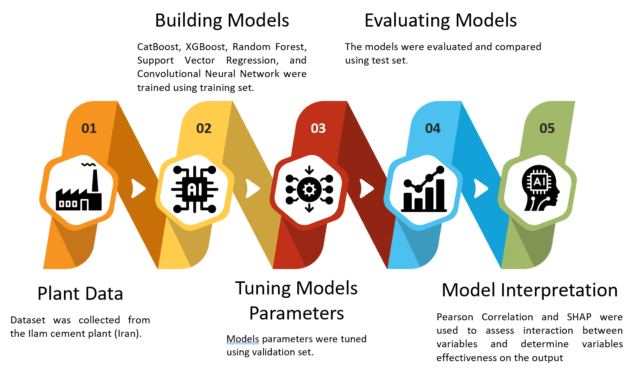
In a recent report published in Scientific Reports, Professor Saeed Chehreh Chelgani from Luleå University of Technology and WISE-affiliated researcher and his colleagues tackled one of the cement industry’s most pressing challenges: energy efficiency.

25 Aug 2025
WIRA-SuPRA invites industry professionals to Husqvarna, Sweden, for a two-day event exploring how artificial intelligence is transforming the plastics industry.
25 Aug 2025
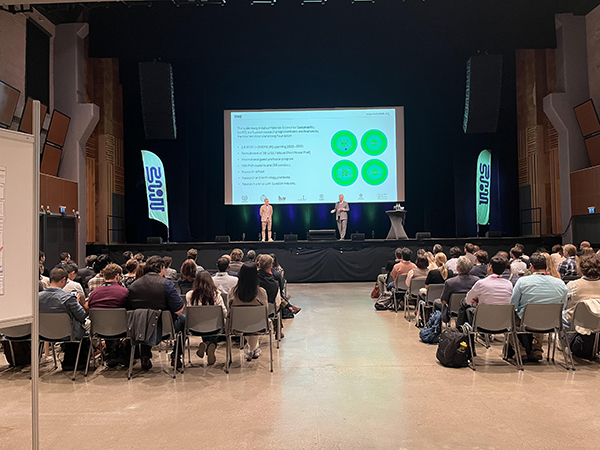
Welcome Meeting 2025 is now wrapped up – and what an event it was!

22 Aug 2025
Can smarter recycling pave the way for a more sustainable industry?
19 Aug 2025
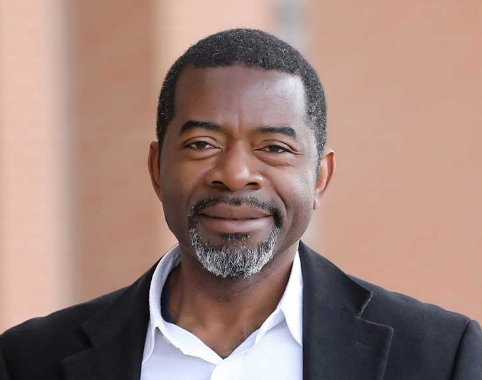
“To achieve climate neutrality by 2050, research and innovations in energy, transport, manufacturing industry, and sustainable practices globally are crucial”, says Professor Ange Nzihou from IMT Mines Albi, France.

16 Aug 2025
On Wednesday, 20 August, Prof. Hjörvarsson will give a talk at the WISE Welcome Meeting at Louis De Geer Konsert & Kongress in Norrköping.
– I’ll give you a teaser: the title of my talk is “Bullerbyn 2.0 / El Dorado,” says Hjörvarsson with a big smile.
12 Aug 2025
The call for KAW Proof of Concept Grants in Materials Science for Sustainability will open soon.

11 Aug 2025
The Wallenberg Initiative Material Science for Sustainability (WISE) is proud to launch its second major faculty recruitment drive, opening up new opportunities to lead cutting-edge research in sustainable materials science.
Picture by Luleå University of Technology.
7 Aug 2025
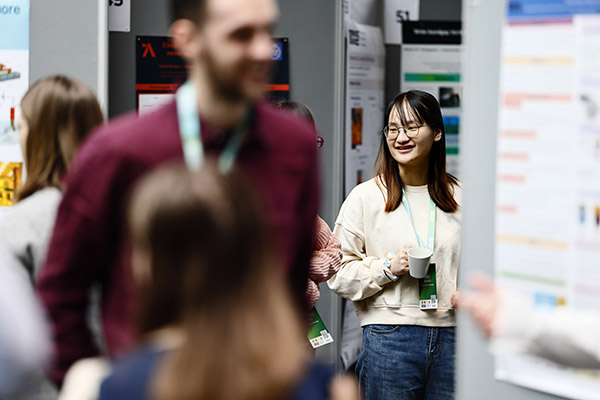
Get ready—one of the most anticipated events of the year is just around the corner! The WISE Welcome Meeting 2025 is fast approaching, and you won’t want to miss it!
17 Jun 2025
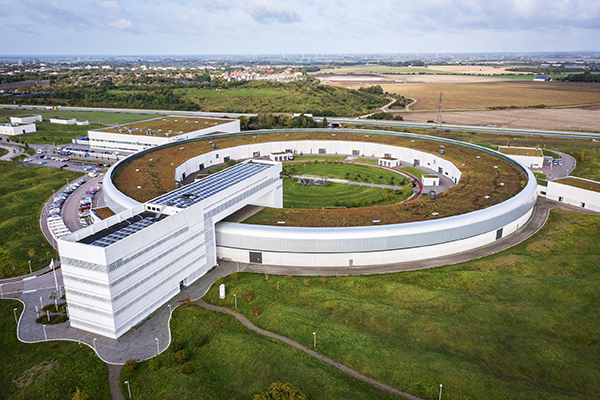
MAX IV is awarded 200 million SEK from Knut and Alice Wallenberg Foundation and WISE to construct and establish a 3D imaging X-ray technology aimed at studying and developing advanced materials for the transition to a sustainable society.
16 Jun 2025
The Wallenberg Initiative Material Science for Sustainability (WISE) is excited to announce the launch of its second major faculty recruitment call.
Picture by Luleå University of technology.
9 Jun 2025
Do not miss out as the Knut and Alice Wallenberg Foundation soon is set to open applications for its 2025 Proof of Concept Grants in Materials Science for Sustainability. The call opens on September 1 and closes on October 15, 2025, at 13:00.
26 May 2025
The Knut and Alice Wallenberg Foundation, in partnership with the WISE research program, has selected nine promising innovation projects to receive Proof-of-Concept (PoC) grants. ,
22 May 2025
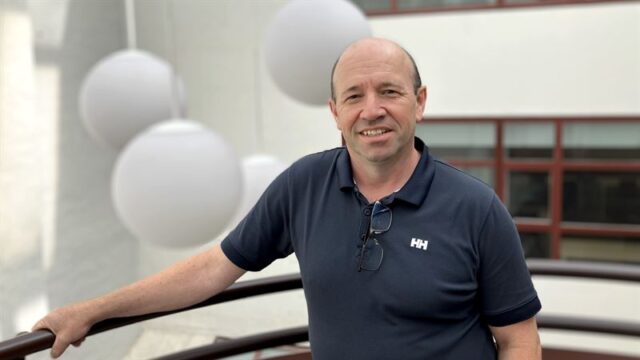
Making steel the traditional way pushes a lot of carbon dioxide into the atmosphere—about 8% of all global energy-related emissions, according to the International Energy Agency (IEA). But there’s a greener way forward.
Picture taken by Smoltek Hydrogen.
19 May 2025
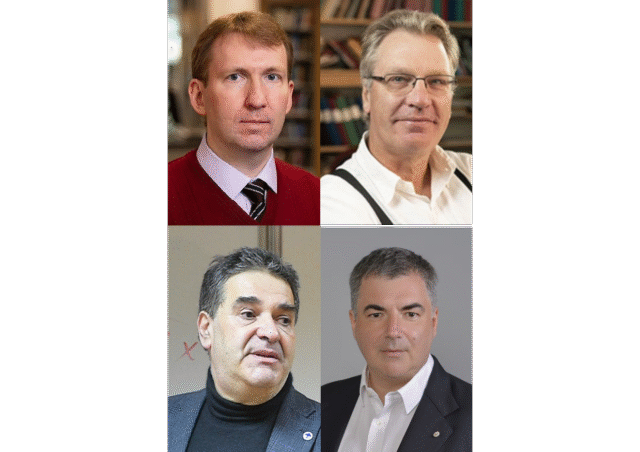
A notable ensemble of WISE expertise—including Vladislav Borisov (WISE-affiliated researcher, Uppsala University), Prof. Mikhail I. Katsnelson (Radboud University, WISE Guest Professor), Prof. Konstantin Novoselov (National University of Singapore, member of WISE’s International Scientific Advisory Board), Prof. Olle Eriksson (Uppsala University, WISE co-director), and collaborators—uncovered a novel form of magnetic order in 2D materials.

16 May 2025
Chalmers University of Technology has officially inaugurated a new high-end research infrastructure to support Sweden’s transition to sustainable materials, as part of the national WISE initiative.
13 May 2025
The hazardous materials within e-waste can pose severe environmental and health risks if not managed properly. To pave the way for a sustainable future, we need to embrace cutting-edge technologies and innovative approaches.
Picture taken by Mycronic.